What are Mucopolysaccharidoses?
Mucopolysaccharidoses refers to a group of inherited metabolic disorders. There are 7 specific genetic disorders within this group. The condition is progressive, and symptoms can vary significantly, even among individuals within the same family. Most individuals are diagnosed in either childhood or adolescence.
The Mucopolysaccharidoses group of disorders affects around 1 in 25,000 children a year.
Health conditions related to the syndrome may include heart and respiratory disease and severe sleep apnea. Enlarged organs are also a potential health complication in individuals with the syndrome. Shared characteristics of all mucopolysaccharidoses include growth and/or developmental delay, coarse facies, skeletal dysplasia, hernia, and corneal clouding.
What gene change causes Mucopolysaccharidoses?
Individuals with Mucopolysaccharidoses either lack or have malfunctioning lysosomal enzymes. These enzymes are responsible for breaking down glycosaminoglycans, or complex carbohydrates within the body. When they are missing or malfunctioning, it leads to a build of carbohydrates in the cells, blood, brain, and spinal cord, leading to cellular damage.
Most mucopolysaccharidoses are autosomal recessive disorders, except for type II, which is X-linked recessive.
What are the main symptoms of Mucopolysaccharidoses?
The main symptoms of Mucopolysaccharidoses may vary between individuals and may also vary in the extent of their severity. The condition is progressive, and most individuals deteriorate over time in terms of their health condition.
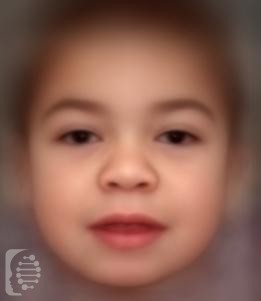
Common symptoms in the early stages of diagnosis include frequent colds and growth and developmental delays. Typical facial features include a flat nasal bridge, thick lips, an enlarged mouth, and jaw. Dwarfism, dysplasia, and excess body hair are other possible symptoms.
Possible clinical traits/features:
Limitation of joint mobility, Decreased nerve conduction velocity, Coarse facial features, Everted lower lip vermilion, Obstructive sleep apnea, Sensorineural hearing impairment, Pes cavus, Autosomal recessive inheritance, Short neck, Wide mouth, Sinusitis, Retinal degeneration, Wide nose, Broad face, Abnormal aortic valve morphology, Mucopolysacchariduria, Cerebral palsy, Aortic valve stenosis, Aortic regurgitation, Intellectual disability, Mandibular prognathia, Splenomegaly, Thick lower lip vermilion, Glaucoma, Full cheeks, Genu valgum, Depressed nasal bridge, Hypertonia, Hepatomegaly, Opacification of the corneal stroma, Hemiplegia/hemiparesis.
How is it diagnosed?
To find out if someone has a diagnosis of Mucopolysaccharidoses, it is important to have a consultation and evaluation with a clinical genetic specialist. Specialists may also suggest specific genetic testing or other types of tests to help reach a diagnosis. FDNA’s AI technology can help speed up the diagnostic process by analyzing facial features and other health information.