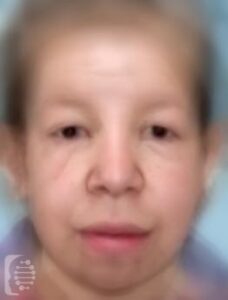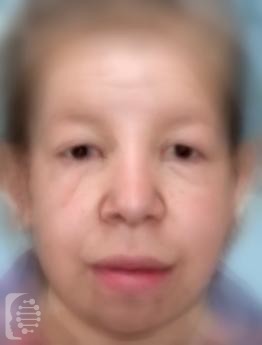
What is Macs syndrome?
Macs syndrome is a group of conditions that affect the development of the eyes, before birth. The name stands for Microphthalmia, Anophthalmia, and Coloboma.
These conditions are rare and occur in several thousand children born worldwide every year.
Syndrome Synonyms:
Macrocephaly-alopecia-cutis laxa-scoliosis; Macrocephaly, Alopecia, Cutis Laxa, and Scoliosis MACS syndrome; RIN2 syndrome; Tall Forehead, Sparse Hair, Skin Hyperextensibility, and Scoliosis
What gene change causes Macs syndrome?
Mutations in the RIN2 gene are responsible for the syndrome and are inherited in an autosomal recessive fashion.
Autosomal recessive inheritance means an affected individual receives one copy of a mutated gene from each of their parents, giving them two copies of a mutated gene. Parents, who carry only one copy of the gene mutation will not generally show any symptoms but have a 25% chance of passing the copies of the gene mutations onto each of their children.
What are the main symptoms of Macs syndrome?
Affected individuals with the syndrome may be born with small, underdeveloped eyes (microphthalmia). This may affect one or both of the eyes. As a result of this symptom, some individuals are blind, while others may have some residual sight.
- Anophthalmia: when an eye/eyes are completely missing, and the eye socket is empty.
- Coloboma: refers to a gap in one of the eyes. Whether vision is affected by this symptom depends on where in the eye the cleft is.
Other symptoms associated with the MACS conditions include endocrine or heart issues, as well as behavior issues, and intellectual disability.
Possible clinical traits/features:
Autosomal recessive inheritance, Single transverse palmar crease, Osteoporosis, Palpebral edema, Pes planus, Alopecia, Bruising susceptibility, Bronchiectasis, Abnormality of the sternum, Brachydactyly, Coarse facial features, Downslanted palpebral fissures, Cutis laxa, Decreased body weight, Cryptorchidism, Gingival overgrowth, Short stature, Ichthyosis, High palate, Hypergonadotropic hypogonadism, Hyperextensible skin, High pitched voice, Joint hypermobility, Muscular hypotonia, Prolonged bleeding time, Umbilical hernia, Sparse hair, Urethral stenosis, Thick lower lip vermilion, Sparse and thin eyebrow, Irregular dentition, Scoliosis.
How is it diagnosed?
To find out if someone has a diagnosis of Macs syndrome, it is important to have a consultation and evaluation with a clinical genetic specialist. Specialists may also suggest specific genetic testing or other types of tests to help reach a diagnosis. FDNA’s AI technology can help speed up the diagnostic process by analyzing facial features and other health information.