What is Frank-Ter Haar syndrome (FTHS)?
Frank-Ter Haar syndrome rare genetic syndrome, with less than 30 cases diagnosed globally to date.
The syndrome presents with a wide range of possible symptoms that affect multiple parts of the body.
These include a number of unique facial features and potential health conditions.
This syndrome is also known as:
Dermato-cardio-skeletal syndrome; Frank-Ter Haar syndrome; Melnick-Needles Syndrome, Autosomal Recessive, Formerly; Ter Haar Syndrome
What gene change causes Frank-Ter Haar syndrome (FTHS)?
Mutations to the SH3PXD2B gene cause the syndrome. It is inherited in an autosomal recessive pattern.
Autosomal recessive inheritance means an affected individual receives one copy of a mutated gene from each of their parents, giving them two copies of a mutated gene. Parents, who carry only one copy of the gene mutation will not generally show any symptoms but have a 25% chance of passing the copies of the gene mutations onto each of their children.
What are the main symptoms of Franl-Ter Haar syndrome (FTHS)?
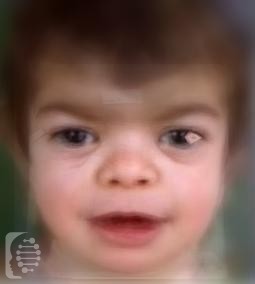
- The main physical symptoms of the syndrome include skeletal abnormalities, short digits (fingers and toes), a flattened back of the head, large cornea, wide fontanelles, a prominent forehead, widely spaced and deep-set eyes, prominent eyes, full cheeks and a small chin.
- Other unique facial features include a deep nasal bridge, full lips and a broad mouth.
- Individuals may also be born with heart defects and be diagnosed with developmental delay
Possible clinical traits/features:
Bowing of the long bones, Flared metaphysis, Cortical irregularity, Malformation of the heart and great vessels, Dental malocclusion, Delayed cranial suture closure, Proptosis, Short long bone, Micrognathia, Abnormally large globe, Glaucoma, Full cheeks, Hypertelorism, Anterior concavity of thoracic vertebrae.
How is it diagnosed?
To find out if someone has a diagnosis of Frank-Ter Haar syndrome (FTHS), it is important to have a consultation and evaluation with a clinical genetic specialist. Specialists may also suggest specific genetic testing or other types of tests to help reach a diagnosis. FDNA’s AI technology can help speed up the diagnostic process by analyzing facial features and other health information.