What is Burn-McKeown syndrome (BMKS)?
Burn-McKeown syndrome is a rare genetic, congenital condition. Many of its symptoms are present at birth.
The most obvious symptom of this syndrome is the blockage of an affected individual’s nasal passages at birth.
Unique facial features and hearing loss, of varying degrees, are also common with the syndrome.
This syndrome is also known as:
Burn-McKeown syndrome Oculootofacial Dysplasia; OOFD
Which gene change causes Burn-McKeown syndrome (BMKS)?
Changes to the TXNL4A gene are responsible for the syndrome. It is inherited in an autosomal recessive pattern.
Autosomal recessive inheritance means an affected individual receives one copy of a mutated gene from each of their parents, giving them two copies of a mutated gene. Parents, who carry only one copy of the gene mutation will not generally show any symptoms but have a 25% chance of passing the copies of the gene mutations onto each of their children.
What are the main symptoms of Burn-McKeown syndrome (BMKS)?
The most serious feature of the syndrome relates to the narrowing or complete blockage of an individual’s nasal passages at birth. As this symptom can seriously affect an infant’s ability to breathe, surgery is often required to correct it.
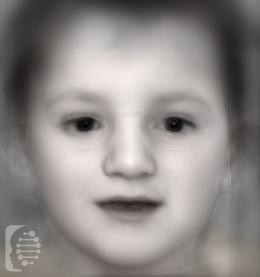
Unique facial features of the syndrome include narrow eyelid openings and a gap in the lower eyelids, as well as widely spaced eyes. Other characteristics include a large nasal bridge, large ears, and a small mouth.
Individuals may be born with hearing loss in both ears, although the extent and severity of this loss varies between individuals.
Heart abnormalities are also common with the syndrome, most frequently PDA, or patent ductus arteriosus.
Possible clinical traits/features:
Underdeveloped nasal alae, Hypomimic face, Prominent nasal bridge, Hypertelorism, Short stature, Preauricular skin tag, Thin vermilion border, Protruding ear, Autosomal recessive inheritance, Renal hypoplasia, Micrognathia, Mandibular prognathia, Narrow mouth, Short nose, Abnormality of metabolism/homeostasis, 2-3 toe syndactyly, Bilateral choanal atresia/stenosis, Short philtrum, Ventricular septal defect, Atrial septal defect, Abnormal palate morphology, Abnormal cardiac septum morphology, Bifid uvula, Blepharophimosis, Cleft palate, Choanal atresia, Conductive hearing impairment, Feeding difficulties in infancy, Cleft upper lip, Lower eyelid coloboma.
How is it diagnosed?
To find out if someone has a diagnosis of Burn-McKeown syndrome (BMKS), it is important to have a consultation and evaluation with a clinical genetic specialist. Specialists may also suggest specific genetic testing or other types of tests to help reach a diagnosis. FDNA’s AI technology can help speed up the diagnostic process by analyzing facial features and other health information.