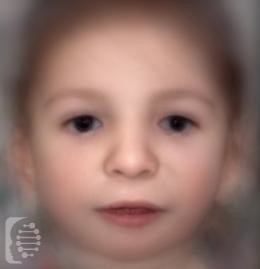
What is Acrofacial Dysostosis 1, Nager Type (AFD1)?
Acrofacial Dysostosis 1, Nager Type is a rare genetic condition, with currently more than 75 cases reported to date.
Symptoms may vary but generally, infants born with the condition require assistance with feeding and possibly assistance with breathing, related to the specific unique physical features of the condition.
The majority of cases of the syndrome are not inherited and are the first in a family.
This syndrome is also known as:
Afd; Nager Type Mandibulofacial Dysostosis; Treacher Collins Type; With Limb Anomalies; Nager Acrofacial Dysostosis; Nager Syndrome
What gene change causes Acrofacial Dysostosis 1, Nager Type (AFD1)?
Mutations in the SF3B4 gene are responsible for the syndrome. The majority of cases are de novo mutations, meaning there is no known previous family history or inheritance pattern. However, the syndrome has been noted to have been passed on in both an autosomal dominant or recessive way.
In some cases, a genetic syndrome may be the result of a de-novo mutation and the first case in a family. In this case, this is a new gene mutation that occurs during the reproductive process.
Autosomal recessive inheritance means an affected individual receives one copy of a mutated gene from each of their parents. Parents, who carry only one copy of the gene mutation will not generally show any symptoms but have a 25% chance of passing the copies of the gene mutations onto each of their children.
In the case of autosomal dominant inheritance just one parent is the carrier of the gene mutation, and they have a 50% chance of passing it onto each of their children. Syndromes inherited in an autosomal dominant inheritance are caused by just one copy of the gene mutation.
What are the main symptoms of Acrofacial Dysostosis 1, Nager Type (AFD1)?
Symptoms are known to vary widely amongst individuals with the condition, and even amongst family members with the same diagnosis.
Unique facial characteristics of the syndrome include absent or small thumbs, underdeveloped cheekbones, a smaller lower jaw, an abnormally shaped nose, a wide mouth, absent eyebrows, and an absent ear canal which can cause hearing loss. A cleft palate is also not uncommon.
The syndrome does not generally affect an individual’s intellectual ability but speech delay is a symptom of the condition and related to hearing loss.
Bone abnormalities are a common feature also. This tends to affect the forearms and elbows of an individual but can also affect the bones in the legs and feet.
Possible clinical traits/features:
Malar flattening, Limitation of joint mobility, Hip dislocation, Cleft upper lip, Cleft palate, Malformation of the heart and great vessels, Lower eyelid coloboma, Atresia of the external auditory canal, Downslanted palpebral fissures, Conductive hearing impairment, Autosomal dominant inheritance, Phocomelia, Posteriorly rotated ears, Polymicrogyria, Unilateral renal agenesis, Wide mouth, Trismus, Velopharyngeal insufficiency, Retrognathia, Preauricular skin tag, Patent ductus arteriosus, Overlapping toe, Sparse lower eyelashes, Toe syndactyly, Urticaria, Foot oligodactyly, Non-midline cleft lip, Intellectual disability, Low-set ears, Low-set, posteriorly rotated ears, Limited elbow extension, Laryngeal hypoplasia, Abnormal nasal morphology, Micrognathia, Neurological speech impairment, Broad hallux, Aplasia/Hypoplasia of the radius, Aplasia/Hypoplasia of the eyebrow, Aqueductal stenosis, Aplasia/Hypoplasia of the thumb, Aganglionic megacolon, Triphalangeal thumb, Absent thumb, Absent radius.
How is it diagnosed?
To find out if someone has a diagnosis of Acrofacial Dysostosis 1, Nager Type, it is important to have a consultation and evaluation with a clinical genetic specialist. Specialists may also suggest specific genetic testing or other types of tests to help reach a diagnosis. FDNA’s AI technology can help speed up the diagnostic process by analyzing facial features and other health information.