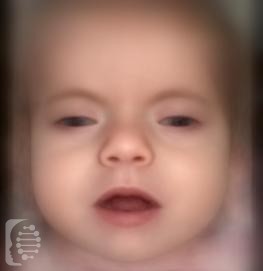
What is Schinzel-Giedion Midface Retraction syndrome?
Schinzel-Giedion Midface Retraction syndrome is a rare congenital genetic condition. This neurodegenerative syndrome has a low life expectancy for individuals affected, and very few affected survive childhood.
The most common cause of death is from respiratory or breathing problems.
What gene change causes Schinzel-Giedion Midface Retraction syndrome?
The syndrome is caused by new mutations in the SETBP1 gene. Research is still ongoing into the exact causes and symptoms of the syndrome, as some patients with clinical similarities do not have mutations in SETBP1 gene.
The exact mode of inheritance was unknown at the time this entry was recorded but appears to be autosomal dominant with mostly de novo mutations.
What are the main symptoms of Schinzel-Giedion Midface Retraction syndrome?
The main physical characteristics of the syndrome include midface retraction, a wide mouth and very large tongue, a large forehead, wide-set eyes and a short nose.
The condition also causes a number of serious health conditions including congenital heart problems, may be related to the valves of the heart. Kidney and urinary issues are also common. As are genital and skeletal abnormalities in individuals affected.
Individuals also present with developmental delays and severe intellectual disability.
The condition is fatal, and life expectancy is short, with most individuals not making it past childhood.
How is it diagnosed?
To find out if someone has a diagnosis of Schinzel-Giedion Midface Retraction syndrome, it is important to have a consultation and evaluation with a clinical genetic specialist. Specialists may also suggest specific genetic testing or other types of tests to help reach a diagnosis. FDNA’s AI technology can help speed up the diagnostic process by analyzing facial features and other health information.