What is Marshall syndrome (MRSHS)?
Marshall syndrome is a rare genetic syndrome that presents with unique facial features, eye anomalies, cataracts, and hearing loss.
Males and females are affected by the syndrome in equal numbers.
What gene change causes Marshall syndrome (MRSHS)?
Mutations in the COL11A1 gene are responsible for the syndrome. It is inherited in an autosomal dominant pattern.
In the case of autosomal dominant inheritance, just one parent is the carrier of the gene mutation, and they have a 50% chance of passing it onto each of their children. Syndromes inherited in an autosomal dominant inheritance are caused by just one copy of the gene mutation.
What are the main symptoms of Marshall syndrome (MRSHS)?
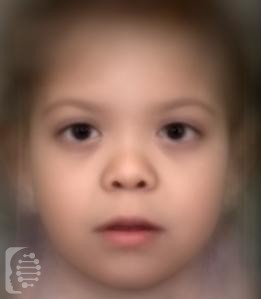
Unique facial features associated with the syndrome include a sunken midface, a flattened nasal bridge, nostrils that turn upward, and widely spaced eyes.
Another symptom involves the presence of calcium deposits in the skull, as well as a thicker upper portion of the skull.
Common symptoms affecting the eyes include nearsightedness, cataracts (clouding of the eyes), and widely spaced eyes. Hearing loss is also common and may vary in severity from person to person.
Possible clinical traits/features:
Sensorineural hearing impairment, Nystagmus, Osteoarthritis, Autosomal dominant inheritance, Vitreoretinal degeneration, Pierre-Robin sequence, Platyspondyly, Retinal detachment, Developmental cataract, Cleft palate, Esotropia, Epicanthus, Malar flattening, Coxa valga, Craniofacial hyperostosis, Glaucoma, Depressed nasal bridge, Genu valgum, Hypertelorism, Hypohidrosis, Hypoplasia of the zygomatic bone, Hypoplastic ilia, Short stature, Visual impairment, Absent frontal sinuses, Calcification of falx cerebri, Arthralgia, Aplasia/Hypoplasia involving the nose, Aplasia/Hypoplasia of the eyebrow, Abnormal vitreous humor morphology, Meningeal calcification, Micrognathia, Myopia, Anteverted nares, Short nose, Macrodontia of permanent maxillary central incisor, Long philtrum, Low-set ears, Ulnar bowing, Radial bowing, Thickened calvaria, Wide tufts of distal phalanges, Irregular distal femoral epiphysis, Irregular proximal tibial epiphyses, Abnormal hair quantity, Lens luxation, Small distal femoral epiphysis.
How is it diagnosed?
To find out if someone has a diagnosis of Marshall syndrome (MRSHS), it is important to have a consultation and evaluation with a clinical genetic specialist. Specialists may also suggest specific genetic testing or other types of tests to help reach a diagnosis. FDNA’s AI technology can help speed up the diagnostic process by analyzing facial features and other health information.