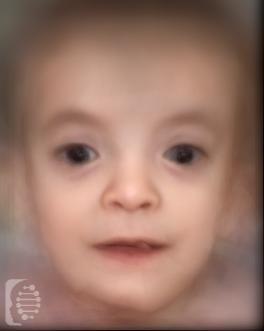
What is Lenz-Majewski Hyperostotic Dwarfism (LMHD)?
Lenz-Majewski Hyperostotic Dwarfism is an extremely rare genetic condition. The main identifying symptoms of the syndrome include dwarfism, a unique facial appearance, cutis laxa (sagging skin), and progressive bone sclerosis.
The syndrome is also characterized by intellectual disability, which is often quite severe.
This syndrome is also known as:
Hyperostotic dwarfism Lenz-Majewski Syndrome
What gene change causes Lenz-Majewski Hyperostotic Dwarfism (LMHD)?
The PTDSS1 gene is responsible for causing the syndrome. It is inherited in an autosomal dominant pattern.
In the case of autosomal dominant inheritance, just one parent is the carrier of the gene mutation, and they have a 50% chance of passing it onto each of their children. Syndromes inherited in an autosomal dominant inheritance are caused by just one copy of the gene mutation.
What are the main symptoms of Lenz-Majewski Hyperostotic Dwarfism (LMHD)?
Distinctive facial characteristics of the syndrome include widely spaced eyes, prominent ears, and a broad forehead. Additionally, a large head and wide fontanelles are often seen.
Moderate to severe intellectual disability is a feature of the syndrome in all identified patients.
Other common symptoms include an absent collarbone, abnormal tooth enamel, abnormality of the bones, and delayed bone maturation. Severe growth retardation is another symptom.
Possible clinical traits/features:
Autosomal dominant inheritance, Sensorineural hearing impairment, Wide mouth, Thin skin, Prominent scalp veins, Syndactyly, Kyphosis, Hypertelorism, Cognitive impairment, Hypospadias, Hernia of the abdominal wall, Hydrocephalus, Humeroradial synostosis, Broad forehead, Hyperextensibility of the finger joints, Short stature, Cryptorchidism, Cutis marmorata, Cutis laxa, Craniofacial hyperostosis, Agenesis of corpus callosum, Displacement of the urethral meatus, Brachydactyly, Diaphyseal thickening, Finger syndactyly, Failure to thrive, Facial palsy, Flared metaphysis, Elbow flexion contracture, Delayed skeletal maturation, Limitation of joint mobility, Delayed cranial suture closure, Cleft palate, Thick lower lip vermilion, Microcephaly, Macrocephaly, Symphalangism affecting the phalanges of the hand, Sporadic, Progressive sclerosis of skull base, Prematurely aged appearance, Sparse hair, Proximal symphalangism of hands, Relative macrocephaly, Frontal bossing, Prominent forehead, Scoliosis, Intellectual disability.
How is it diagnosed?
To find out if someone has a diagnosis of Lenz-Majewski Hyperostotic Dwarfism (LMHD), it is important to have a consultation and evaluation with a clinical genetic specialist. Specialists may also suggest specific genetic testing or other types of tests to help reach a diagnosis. FDNA’s AI technology can help speed up the diagnostic process by analyzing facial features and other health information.