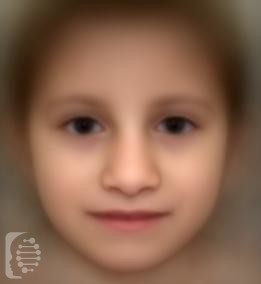
What is Floating-Harbor syndrome (FLHS)?
Floating-Harbor syndrome is a genetic condition that presents with unique facial features and characteristics.
Other main symptoms include proportionate short stature, delayed bone age and delayed speech development.
It is named for the hospitals in California where it was first described.
What gene change causes Floating-Harbor (FLHS) syndrome?
Mutations in the SRCAP gene located on chromosome 16 are responsible for the syndrome. Most cases are the result of a de novo mutation, but occasionally the syndrome may be caused by the inheritance of the deletion from one affected parent.
In some cases, a genetic syndrome may be the result of a de-novo mutation and the first case in a family. In this case, this is a new gene mutation which occurs during the reproductive process.
In the case of autosomal dominant inheritance just one parent is the carrier of the gene mutation, and they have a 50% chance of passing it onto each of their children. Syndromes inherited in an autosomal dominant inheritance are caused by just one copy of the gene mutation.
What are the main symptoms of Floating-Harbor syndrome (FLHS)?
The symptoms of the syndrome include mild intellectual disability and delayed speech development.
In infancy, individuals with the syndrome may show delayed bone age, but this usually corrects anywhere from 6-12 years of age.
Physical conditions of the syndrome include a triangular face, low hairline, deep-set eyes, long eyelashes, a large nose that becomes more prominent with age, a short philtrum, and thin lips.
Individuals may also have short fingers, clubbing, a curved fifth finger, and sometimes a high-pitched voice.
Possible clinical traits/features:
Cryptorchidism, Delayed skeletal maturation, Limitation of joint mobility, Deeply set eye, Conductive hearing impairment, Downturned corners of mouth, Coarctation of aorta, Clinodactyly of the 5th finger, Malformation of the heart and great vessels, Constipation, Cone-shaped epiphyses of the phalanges of the hand, Congenital posterior urethral valve, Broad columella, Expressive language delay, Smooth philtrum, Prominent nose, Brachydactyly, Camptodactyly of finger, Varicocele, Telecanthus, Triangular face, Strabismus, Short philtrum, Umbilical hernia, Mesocardia, Hypertrichosis, Hypermetropia, Malabsorption, Hypospadias, Cognitive impairment, Short stature, Underdeveloped nasal alae, Hypoplasia of penis, Hydronephrosis, Hirsutism, Autosomal dominant inheritance, Posteriorly rotated ears, Persistent left superior vena cava, Wide mouth, Recurrent otitis media, Short neck, Thin vermilion border, Trigonocephaly, Long eyelashes, Low posterior hairline, Low-set, posteriorly rotated ears, Joint laxity.
How is it diagnosed?
To find out if someone has a diagnosis of Floating-Harbor syndrome (FHLS), it is important to have a consultation and evaluation with a clinical genetic specialist. Specialists may also suggest specific genetic testing or other types of tests to help reach a diagnosis. FDNA’s AI technology can help speed up the diagnostic process by analyzing facial features and other health information.