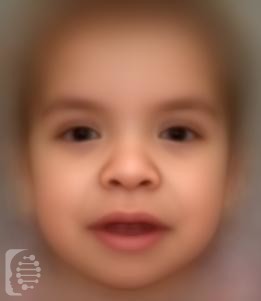
What is Costello syndrome?
Costello syndrome is a rare genetic disorder thought to affect just 200-300 people worldwide, to date.
Individuals with the syndrome are at higher risk for non-cancerous and cancerous tumors including papilloma’s and a form of childhood cancer known as rhabdomyosarcoma.
A characteristic coarse facies, as well as facial warts are constant features with this rare disease. As is loose skin on different parts of the body.
Syndrome Synonyms:
Faciocutaneoskeletal Syndrome; FCS Syndrome
What gene change causes Costello syndrome?
Spontaneous mutations on the HRAS gene cause the majority of Costello syndrome cases.
The syndrome is not inherited. Though it has been suggested that autosomal dominant inheritance, and autosomal dominant with somatic mutations are responsible.
In some cases, a genetic syndrome may be the result of a de-novo mutation and the first case in a family. In this case, this is a new gene mutation which occurs during the reproductive process.
What are the main symptoms of Costello syndrome?
The main symptoms of the syndrome are delayed development and intellectual disability.
Failure to thrive, a short stature, and congenital heart defects are also characteristic of the disease.
Physical features of the syndrome include distinct loose folds on skin on the hands and feet especially, a large mouth, thick lips, short stature, skeletal abnormalities, dental problems and issues with vision. Hypotonia or low muscle tone is also common.
Possible clinical traits/features:
Overgrowth, Pectus carinatum, Autosomal dominant inheritance, Wide anterior fontanel, Thickened nuchal skin fold, Renal insufficiency, Webbed neck, Short neck, Poor suck, Pneumothorax, Pointed chin, Posteriorly rotated ears, Large earlobe, Obstructive sleep apnea, Hypertrophic cardiomyopathy, Hypoglycemia, Hypoplastic toenails, High palate, Hydrocephalus, Hoarse voice, Hyperextensibility of the finger joints, Global developmental delay, Cognitive impairment, Hypertelorism, Hyperpigmentation of the skin, Hyperkeratosis, Generalized hyperpigmentation, Depressed nasal bridge, Full cheeks, Fragile nails, Acanthosis nigricans, Short stature, Anteverted nares, Low-set, posteriorly rotated ears, Low-set ears, Macroglossia, Large face, Joint hypermobility, Lack of skin elasticity, Limited elbow movement, Mitral valve prolapse, Micrognathia, Nevus, Abnormality of dental enamel, Arrhythmia, Abnormal dermatoglyphics, Intellectual disability, Abnormal palate morphology, Abnormal pulmonary valve morphology, Abnormal mitral valve morphology.
How is it diagnosed?
To find out if someone has a diagnosis of Costello syndrome, it is important to have a consultation and evaluation with a clinical genetic specialist. Specialists may also suggest specific genetic testing or other types of tests to help reach a diagnosis. FDNA’s AI technology can help speed up the diagnostic process by analyzing facial features and other health information.