What is Coffin-Lowry syndrome (CLS)?
Coffin-Lowry syndrome is a rare disease that exhibits more severe symptoms in males than females due to the way in which it is inherited. Females with the syndrome may display none to very few or very mild symptoms.
Severe mental and intellectual disability are characteristic of the syndrome. Other defining features include issues related to growth, heart problems, and visual and hearing impairments.
The condition is believed to occur in approximately 1 in 50-100,000 people, making it fairly rare.
Syndrome Synonyms:
CLS
What gene change causes Coffin-Lowry syndrome (CLS)?
Mutations in the RPS6KA3 gene are responsible for the syndrome.
The condition is inherited in an X-linked dominant pattern which explains why symptoms are more severe in males than females.
With syndromes inherited in an X-linked dominant pattern, a mutation in just one of the copies of the gene causes the syndrome. This can be in one of the female X chromosomes, and in the one X chromosomes males have. Males tend to have more severe symptoms than females.
What are the main symptoms of Coffin-Lowry syndrome (CLS)?
- For males intellectual disability related to the syndrome may be moderate to severe. In females, it is usually non-existent or very mild.
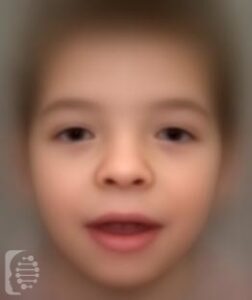
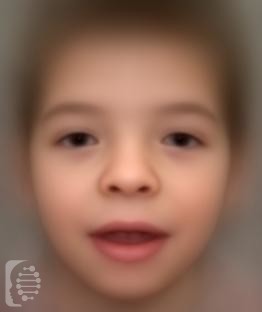
- Unique facial features of the syndrome include a prominent forehead, widely spaced eyes, downward slanting eyes, a short nose, a wide nasal tip, a wide mouth, and full lips.
- Other physical features of the condition include soft, thin or tapered fingers, a short stature,a very small head (microcephaly), and progressive curvature of the spine.
- Another unique symptom of the disease is collapsing after being startled by a loud or sudden noise. This is known as SIDEs (Stimulus-Induced Drop Episodes).
Possible clinical traits/features:
X-linked dominant inheritance, Rectal prolapse, Frontal bossing, Telecanthus, Thick eyebrow, Microcephaly, Thick lower lip vermilion, Scoliosis, Thickened calvaria, Thick nasal septum, Reduced number of teeth, Short metacarpal, Ventriculomegaly, Brachydactyly, Coarse hair, Coarse facial features, Everted lower lip vermilion, Epicanthus, Drumstick terminal phalanges, Downslanted palpebral fissures, Feeding difficulties in infancy, Dental malocclusion, Delayed skeletal maturation, Delayed eruption of teeth, Delayed closure of the anterior fontanelle, Decreased body weight, Cutis marmorata, Cutis laxa, Craniofacial hyperostosis, Coxa valga, Pectus carinatum, Pes planus, Sensorineural hearing impairment, Optic atrophy, Open mouth, Protruding ear, Uterine prolapse, Wide mouth, Widely spaced teeth, Single transverse palmar crease, Seizure, Short stature, Gait disturbance, Depressed nasal bridge, Cognitive impairment, High palate, Hyperextensibility of the finger joints, Hyperconvex fingernails, Highly arched eyebrows.
How is it diagnosed?
To find out if someone has a diagnosis of Coffin-Lowry syndrome (CLS), it is important to have a consultation and evaluation with a clinical genetic specialist. Specialists may also suggest specific genetic testing or other types of tests to help reach a diagnosis. FDNA’s AI technology can help speed up the diagnostic process by analyzing facial features and other health information.