What is Cherubism?
Cherubism is a rare genetic condition diagnosed in around 300 individuals worldwide.
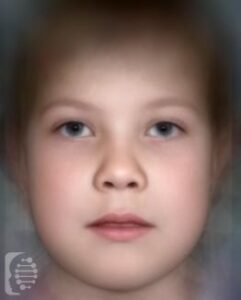
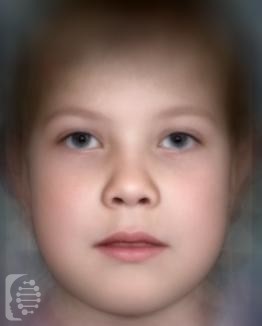
Individuals with cherubism have very distinct facial features.
The syndrome is believed to be two times more common in males than females.
Syndrome Synonyms:
CRBM
What gene change causes Cherubism?
Changes in the SH3BP2 gene are responsible for the syndrome. The syndrome is inherited in an autosomal dominant pattern.
In the case of autosomal dominant inheritance, just one parent is the carrier of the gene mutation, and they have a 50% chance of passing it onto each of their children. Syndromes inherited in an autosomal dominant inheritance are caused by just one copy of the gene mutation.
What are the main symptoms of Cherubism?
The main symptom of the syndrome is due to abnormal bone tissue in the jaw. Beginning in childhood the bone in the upper and lower jaws of affected individuals is replaced by painless, cyst like growths.
This growth usually stabilizes with the onset of puberty. It may also be mild to severe depending on the individual. Individuals with severe symptoms may also suffer from breathing and feeding difficulties due to these changes to the jaw.
Other symptoms of the condition may include upturned eyes and premature loss of primary teeth.
Possible clinical traits/features:
Macular scar, Marcus Gunn pupil, Round face, Childhood-onset, Reduced number of teeth, Proptosis, Autosomal dominant inheritance, Optic neuropathy, Oligodontia, Optic atrophy, Striae distensae, Visual impairment, Constriction of peripheral visual field, Feeding difficulties in infancy, Abnormality of dental morphology, Neoplasm of the skeletal system, Abnormality of the mandible, Abnormality of the voice, Apnea.
How is it diagnosed?
To find out if someone has a diagnosis of Cherubism, it is important to have a consultation and evaluation with a clinical genetic specialist. Specialists may also suggest specific genetic testing or other types of tests to help reach a diagnosis. FDNA’s AI technology can help speed up the diagnostic process by analyzing facial features and other health information.