Through RAPID, FDNA will deploy and expand a scalable national platform to connect families and clinicians earlier in the rare disease diagnostic pathway. It links Family Health Checker, for parents, with Face2Gene, for clinicians, where FDNA’s photo-analysis AI works with the symptoms and health history families provide.
ATLANTA, August 31, 2026 – FDNA, Inc. announced today that it has been selected by the Advanced Research Projects Agency for Health (ARPA-H), an agency within the U.S. Department of Health and Human Services, as a performer in the Rare Disease AI/ML for Precision Integrated Diagnostics (RAPID) program. ARPA-H awarded FDNA a contract as part of a larger investment in RAPID.
For many families, the search for a rare disease diagnosis begins long before they reach a specialist. A parent may notice developmental delays, unusual features, or unexplained symptoms, but that information often remains spread across appointments, records, photos, and family observations.
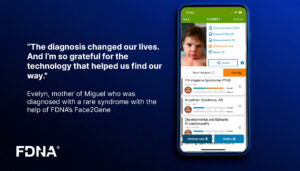
FDNA is building an AI-enabled, connected path. Family Health Checker gives parents and patients a simple digital front door to bring concerns, photos, symptoms, and health history into a structured clinical workflow. Face2Gene, FDNA’s clinician-facing platform, analyzes facial photos and other patient information to help clinicians develop a differential list of possible syndromic conditions. It is designed to support clinical review, documentation, and next steps; diagnosis remains a clinical determination, supported when appropriate by diagnostic testing.
Through RAPID, FDNA will connect these sides at national scale. The work will help families bring forward relevant information earlier, help clinicians organize and review that information more efficiently, and contribute consented, high-quality data to the RAPID Rare Disease Data Commons so new AI tools can be developed and tested across the rare disease community. The model is especially important for families who may have limited access to genetics specialists, including families in rural, low-income, and historically underrepresented communities. Parents and patients will decide whether to share their information, and the program applies privacy, security, and data governance requirements.
ARPA-H selected FDNA after an extensive technical, program, and contracting review. The selection reflects FDNA’s responsibility to connect families with clinicians, collect high-quality data with consent, and make that data useful across the RAPID program. It also builds on more than a decade of clinical use of Face2Gene, 150+ peer-reviewed publications, and FDNA’s global use by clinicians and researchers.
“Families shouldn’t need to understand the rare disease system before the system can help them,” said Erik A. Feingold, CEO and Co-Founder of FDNA. “Family Health Checker gives parents a simple way to bring their concerns into a clinical pathway. Face2Gene gives clinicians differential support that can help them see the rare conditions to consider. RAPID will help us connect those two sides at national scale and bring more families into the right clinical pathway earlier.”
About ARPA-H RAPID
RAPID, Rare Disease AI/ML for Precision Integrated Diagnostics, is led by program manager Scott Gorman in ARPA-H’s Proactive Health Office. More than 10,000 rare diseases affect over 350 million people worldwide, and the diagnostic odyssey takes six years on average. RAPID is a 4.5-year program to build a large, long-term rare disease dataset and develop AI tools for clinicians, patients, and families. Its goal is to give more people access to rare disease expertise and help them reach an accurate diagnosis sooner.
Learn more: https://arpa-h.gov/explore-funding/programs/rapid
About FDNA
FDNA, Inc., headquartered in Atlanta, develops computer vision and AI-powered phenotyping and differential decision-support technologies to help clinicians assess genetic conditions and rare diseases. Face2Gene is used by thousands of clinicians and researchers across more than 10,000 clinical sites in over 130 countries. Family Health Checker gives parents and patients a non-diagnostic way to raise developmental and health concerns and connect with appropriate care. FDNA is led by Erik A. Feingold, CEO and Co-Founder, and Moti Shniberg, Co-Founder and Chairman.
Learn more: www.fdna.com
This research was, in part, funded by the Advanced Research Projects Agency for Health (ARPA-H). The views and conclusions contained in this document are those of the authors and should not be interpreted as representing the official policies, either expressed or implied, of the United States Government.
Media Contact
Stefanie Eichner
309 East Paces Ferry Rd NE
Suite 400
Atlanta, GA 30305
stefanie@fdna.com
www.fdna.com
+1-404-435-1627